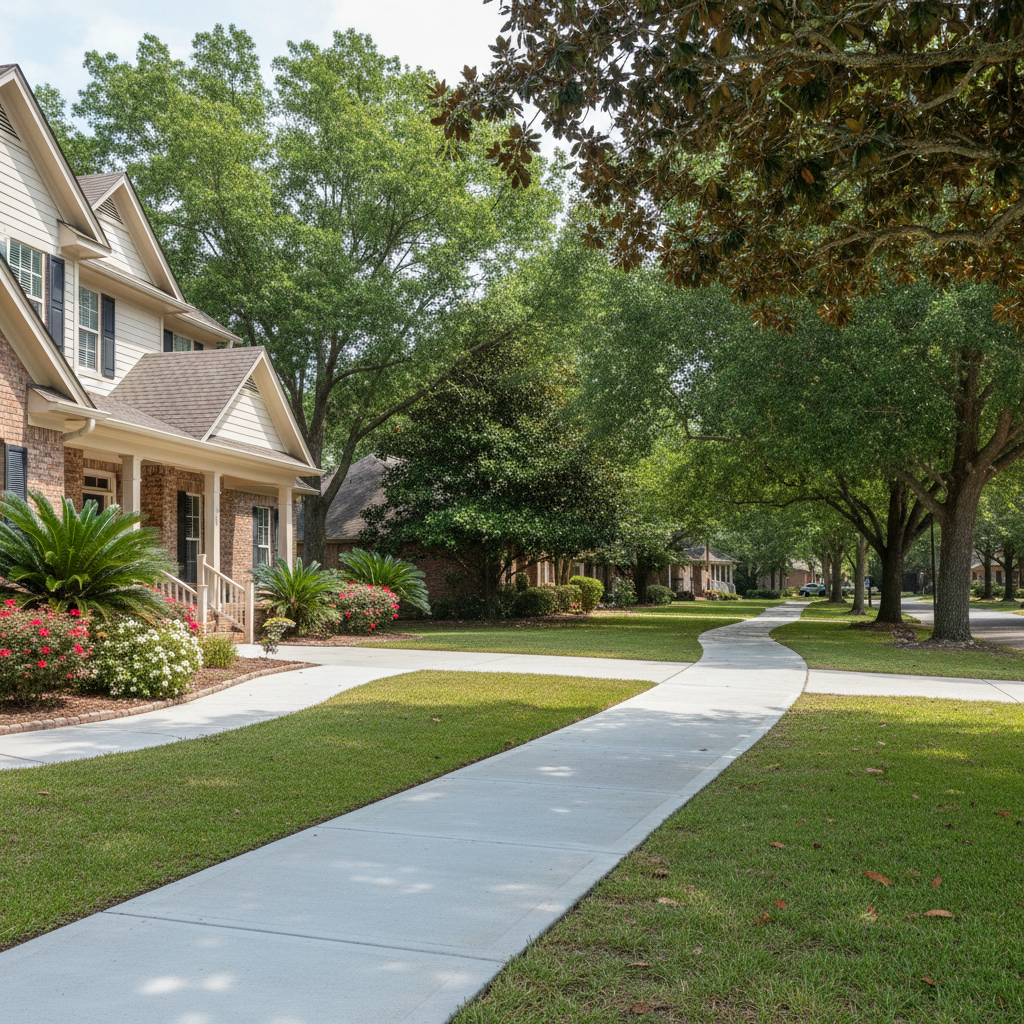
Your sidewalk isn't just a strip of concrete; it's a pathway, a border, and for many businesses, it's the first impression folks get. Here in Mobile, AL, we've got some specific challenges that make a big difference in how long that concrete lasts and how good it looks. You can't just pour concrete anywhere and expect it to hold up, especially not around here.
Why Mobile's Ground is Different
We all know Mobile gets its fair share of rain. And I mean a fair share. That constant moisture, combined with our heavy, often clay-rich soil, creates a real headache for concrete. When the ground gets saturated, it expands. When it dries out, it shrinks. That constant movement underneath your sidewalk puts a lot of stress on the concrete itself. It's not like the sandy soils you might find further east or the rocky ground up north. Our soil is a living, breathing thing that's always shifting.
Then there's the heat and humidity. Concrete cures best under certain conditions, and while our warm weather can be good for initial drying, the long-term exposure to intense sun and high humidity can affect its integrity if it's not mixed and laid correctly. You'll see this especially in older neighborhoods like Spring Hill or Oakleigh Garden District, where sidewalks have been around for decades. Some have held up great, others are a mess of cracks and uneven slabs. A lot of that comes down to how they were built and what kind of attention was paid to our local conditions.
Common Sidewalk Projects We Tackle
So, what kind of sidewalk work do we usually see around here? It's a pretty wide range:
- New construction: Building fresh sidewalks for new homes, businesses, or subdivisions. This is where you can really get it right from the start, making sure the base is prepped properly for our soil.
- Replacement of crumbling paths: A lot of older sidewalks just give up the ghost. They're cracked, uneven, or have roots pushing them up. We're often tearing out old, failing concrete and putting in something that'll last.
- ADA compliance upgrades: This is a big one, especially for businesses. Making sure ramps and pathways meet accessibility standards is crucial, and it's something we're very familiar with.
- Repairing trip hazards: Even a small crack or an uneven slab can be a serious tripping hazard. We get calls all the time to fix these, whether it's grinding down a high spot or replacing a whole section.
Each of these jobs requires an understanding of not just how to pour concrete, but how to pour concrete that's going to stand up to Mobile's unique environment. It's not just about getting the concrete mix right; it's about the sub-base, the drainage, and the expansion joints.
Why Local Expertise Isn't Just a Buzzword
Look, you can hire any contractor to pour concrete. But if they're not familiar with Mobile's specific challenges – the soil, the rain, the humidity, even the local building codes – you might end up with a sidewalk that looks good for a year or two, then starts to crack, sink, or heave. I've seen it happen too many times.
A local contractor, someone like us at Port City Concrete, knows what works here because we live and work here. We've seen the long-term effects of different approaches. We know which aggregates hold up best, how to prepare the sub-grade for our clay soils, and where to put those crucial expansion joints so your sidewalk can handle the ground movement without cracking itself to pieces. We understand the importance of proper drainage to prevent water from undermining the slab.
It's not just about the technical stuff either. We're part of this community. We care about the quality of the work we do because our reputation is built on it, right here in Mobile. When you're looking for someone to handle your concrete sidewalk project, ask them about their experience with Mobile's conditions. If they don't have a good answer, you might want to keep looking. You want someone who knows our dirt, literally, and can lay down concrete that'll serve you well for years to come.